Tuesday, 16 August 2016
Time-resolved 2-million-year-old supernova activity discovered in Earth’s microfossil record
Sunday, 14 February 2016
Gravitational waves and The Theory of Relativity
AN IDIOT'S GUIDE TO...
The Theory of Relativity
Thursday, 19 February 2015
Saturday, 11 January 2014
Friday, 3 January 2014
Saturday, 4 October 2008
The Collegiate Church of Saint Isidoro
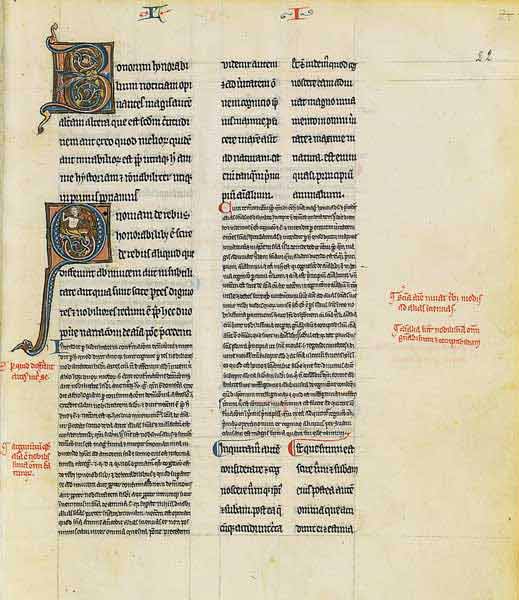
At the northeast side of the roman encampment Legio VII Gemina (Leon) (now in Spain), by the camp wall, King Sancho the Fat (dead in 966), son of Ramiro 2nd, built a monastery for sheltering the rests of the martyr boy from Cordoba, St. Pelayo (we can see a sculpture of him in the front of the church). Her sister, a nun called Elvira Ramirez, moved with all the nuns of her elder monastery, Palat del Rey, to the new one. In the last Xth century, due to the arrival of Almanzor's army, the nuns went to Oviedo for refuge. The monastery of St. Pelayo in Leon was razed by the Arabic chief troops. King Alfonso the Vth (999-1027) rebuilt the monastery using very poor materials, like clay and bricks. Once more, a community of nuns established there, for taking care of the Royal cemetery, where the King had moved the rests of his predecessors, who were dispersed along various kingdom churches; even his parents's, Vermudo the IInd and Elvira.The daughter of Alfonso the Vth, Doña Sancha, first infant and after the Queen herself, tried to exalt the monastery to the highest dignity, helped by her husband, King Fernando the Ist (1037-1065).
They rebuilt the elder brick monastery out of stone and so began the romanic style in their kingdom. They choose the portic of the church as a cemetery and ordered to be buried there. .
They wanted to dignify their church with relevant saints relics; they achieved the moving of St. Isidoro's corpse from Sevilla and St. Vicente's from Avila. They made an extraordinary feast in december, 21st, 1063, and next day they celebrated the moving of St. Isidoro. For this special event, they made splendid donations, jewels and ornaments, that we know nowadays as the Treasure of Leon.
Fernando and Sancha's daughter, infant Urraca Fernandez (dead in 1101), enlarged the church and made splendid donations, like the well known chalice. Another infant, Doña Sancha Raimundez (dead in 1159), with her brother, Emperor Alfonso the VIIth, continued the works in the elder church, began by her grand aunt Doña Urraca, and consecrated the new church in 1149. A year before they had substituted the benedictine female comunity in the monastery by an ordinary prebendaries Council. They ruled the temple and the abbey until 1956, when the council was changed into a secular priests institution, and since then it takes care of the liturgical and intellectual life of the Collegiate Church, the Temple, the Museums open to thousands of visitors, both national and foreign, the Archives and the Library at the disposal of researchers, the Isidorian Editorial and Bookstore, with the main purpose of divulging the history and the art the Collegiate Church and the life of Saint Isidoro.
Saturday, 5 January 2008
Thursday, 20 September 2007
Hafele-Keating experiment
During October, 1971, four cesium atomic beam clocks were flown on regularly scheduled commercial jet flights around the world twice, once eastward and once westward, to test Einstein's theory of relativity with macroscopic clocks. From the actual flight paths of each trip, the theory predicted that the flying clocks, compared with reference clocks at the U.S. Naval Observatory, should have lost 40+/-23 nanoseconds during the eastward trip and should have gained 275+/-21 nanoseconds during the westward trip ...Wednesday, 15 August 2007
Averroes' commentary on De Anima
On the Soul (Greek Περὶ Ψυχῆς (Perì Psūchês), Latin De Anima) is a major treatise by Aristotle, outlining his philosophical views on the nature of living things. His discussion centres on the kinds of souls possessed by different kinds of living things, distinguished by the different life-processes those organisms go through. Thus plants have the capacity for nourishment and reproduction, the minimum that must be possessed by any kind of living organism. Lower animals have, in addition, the powers of sense-perception and self-motion (action). Humans have all these as well as intellect.
The notion of soul used by Aristotle is only distantly related to the usual modern conception. He holds that the soul is the form, or essence of any living thing; that it is not a distinct substance from the body that it is in; that it is the possession of soul (of a specific kind) that makes an organism an organism at all, and thus that the notion of a body without a soul, or of a soul in the wrong kind of body, is simply unintelligible. (He speculates that some parts of the soul--the intellect--may be conceived to exist without the body, but most cannot.) It is difficult to reconcile these points with the popular picture of a soul as a sort of spiritual substance "inhabiting" a body. Some commentators have suggested that Aristotle's term soul is better translated as lifeforce.
Averroes (Ibn Rushd) (1126-1198) was an Andalusian-Arab philosopher and physician. He wrote commentaries on most of the surviving works of Aristotle. These were not based on primary sources (it is not known whether he knew Greek), but rather on Arabic translations. On each work, he wrote the Jami, the Talkhis and the Tafsir which are, respectively, a simplified overview, an intermediate commentary with more critical material, and an advanced study of Aristotelian thought in a Muslim context. The terms are taken from the names of different types of commentary on the Qur'an.
Saturday, 7 July 2007
Super-Kamiokande
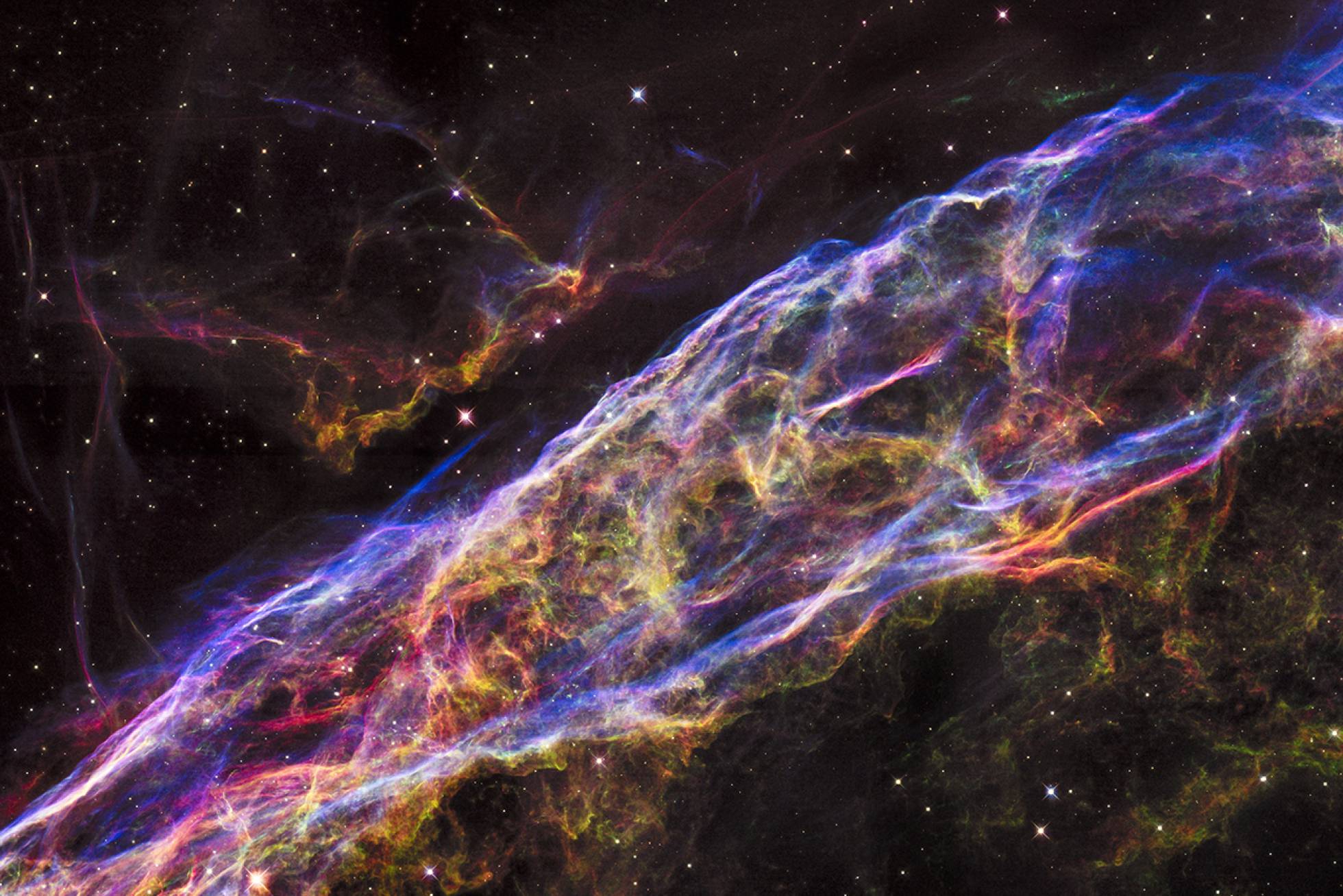
It is believed soon after the big bang, when the universe was at a very high temperature, many neutrinos were produced. In addition, when a star explodes as a supernova, many neutrinos are emitted. Neutrinos are also copiously produced in nuclear reactions in the core of the sun. Also cosmic rays which come into the earth's atmosphere and interact with oxygen or nitrogen nuclei produce neutrinos. Purposes of the research are to elucidate the source of energy of the sun and detect the properties of the enigmatic neutrinos by observing these neutrinos with considerable precision.The detector consists of an inner volume and an outer volume which contain 32,000 tons and 18,000 tons of pure water respectively. The outer detector is used to veto entering cosmic ray muons and is used as a buffer to keep radiation emitted by the surrounding rock and walls from entering the inner volume. The inner detector has 11,200 photomultiplier tubes (PMTs) attached to the bottom, top and sides facing inward. The PMTs collect the pale blue light called Cerenkov light which is emitted by particles travelling fast as light in the water. By measuring the direction and intensity of this light,information about particle interactions such as neutrino interactions or proton decay can be determined (Official Website).
Tuesday, 29 May 2007
28 New Exoplanets Discovered
Astronomers have discovered 28 new planets outside of our solar system, increasing to 236 the number of known exoplanets, revealing that planets can exist around a broad spectrum of stellar types-from tiny, dim stars to giants."We added 12 percent to the total in the last year, and we're very proud of that," said one of the study team members Jason Wright of the University of California at Berkeley. "This provides new planetary systems so that we can study their properties as an ensemble."
The planets are among 37 new objects spotted within the past year. Seven of the objects are failed stars called brown dwarfs, with masses that dwarf the largest, Jupiter-sized planets but too small to sustain the nuclear reactions necessary for stellar ignition.
John Johnson of the University of California at Berkeley and his colleagues presented the findings here today at a meeting of the American Astronomical Society (AAS).
Astronomers don't directly spot extrasolar planets, but rather look for stellar wobbles caused by orbiting planets. The planet's size and distance from the parent star affect how strong or weak of a wobble, and more sophisticated techniques for measuring the stellar wobbles has led to an ever-lengthening list of such outer planets. Now they can detect wobbles of a meter per second compared with the 10-meter limit just 15 years ago.