Tuesday, 29 May 2007

28 New Exoplanets Discovered

Astronomers have discovered 28 new planets outside of our solar system, increasing to 236 the number of known exoplanets, revealing that planets can exist around a broad spectrum of stellar types-from tiny, dim stars to giants.
"We added 12 percent to the total in the last year, and we're very proud of that," said one of the study team members Jason Wright of the University of California at Berkeley. "This provides new planetary systems so that we can study their properties as an ensemble."
The planets are among 37 new objects spotted within the past year. Seven of the objects are failed stars called brown dwarfs, with masses that dwarf the largest, Jupiter-sized planets but too small to sustain the nuclear reactions necessary for stellar ignition.
John Johnson of the University of California at Berkeley and his colleagues presented the findings here today at a meeting of the American Astronomical Society (AAS).
Astronomers don't directly spot extrasolar planets, but rather look for stellar wobbles caused by orbiting planets. The planet's size and distance from the parent star affect how strong or weak of a wobble, and more sophisticated techniques for measuring the stellar wobbles has led to an ever-lengthening list of such outer planets. Now they can detect wobbles of a meter per second compared with the 10-meter limit just 15 years ago.

Friday, 27 April 2007

Astronomers Find First Earth-like Planet in Habitable Zone

The new planet known as Gliese 581 c (L) orbiting a red dwarf star
Astronomers have discovered the most Earth-like planet outside our Solar System to date, an exoplanet with a radius only 50% larger than the Earth and capable of having liquid water. Using the ESO 3.6-m telescope, a team of Swiss, French and Portuguese scientists discovered a super-Earth about 5 times the mass of the Earth that orbits a red dwarf, already known to harbour a Neptune-mass planet. The astronomers have also strong evidence for the presence of a third planet with a mass about 8 Earth masses.
This exoplanet - as astronomers call planets around a star other than the Sun - is the smallest ever found up to now and it completes a full orbit in 13 days. It is 14 times closer to its star than the Earth is from the Sun. However, given that its host star, the red dwarf Gliese 581, is smaller and colder than the Sun - and thus less luminous - the planet nevertheless lies in the habitable zone, the region around a star where water could be liquid! The planet's name is Gliese 581 c.
The discovery was made thanks to HARPS (High Accuracy Radial Velocity for Planetary Searcher), perhaps the most precise spectrograph in the world. Located on the ESO 3.6-m telescope at La Silla, Chile, HARPS is able to measure velocities with a precision better than one metre per second (or 3.6 km/h)! HARPS is one of the most successful instruments for detecting exoplanets and holds already several recent records, including the discovery of another 'Trio of Neptunes'
The detected velocity variations are between 2 and 3 metres per second, corresponding to about 9 km/h! That's the speed of a person walking briskly. Such tiny signals could not have been distinguished from 'simple noise' by most of today's available spectrographs (video).

Photographs from The Met

See one hundred of the best photograph collection works of art from The Metropolitan Museum online.


Charles Nègre (French, 1820–1880). The Refectory of the Imperial Asylum at Vincennes, 1858–59
Gathered in the light-drenched refectory of a newly constructed convalescent hospital on the outskirts of Paris, patients and staff alike turned their eyes and attention to the man with the enormous camera at one end of the room, Charles Nègre. The resulting image, here in a rare unmounted and unretouched proof print from the artist's studio, is the largest and most engaging in a series of photographs that Nègre was commissioned to make as documentation and celebration of the Imperial Asylum at Vincennes. The hospital was established by Emperor Napoléon III to provide those injured on the construction site or in the factory—"the worker's true field of honor," in the words of one of Napoléon's ministers—with care comparable to that given to the nation's military veterans.
Trained as a painter in the same studio as Roger Fenton and Gustave Le Gray, Nègre was one of the era's most skilled photographers of architecture, possessing a particular sensitivity to the ways in which light and shadow animate the surfaces of centuries-old monuments. Here, he seized upon the streaming sunlight as a vehicle to enliven the structure and texture of his picture and to suggest enhanced activity and health in the hospital inhabitants.

Saturday, 14 April 2007

Interactive Poster/Video of The Macaque Genome

Special interactive version of the Macaque Genome poster, with large-format images, text, and video interviews on the broad biomedical and evolutionary themes that the genome raises (view).
You can also read the Lessons from Comparative Genomic (read).

Thursday, 5 April 2007

Worldmapper

Worldmapper is a collection of world maps, where territories are re-sized on each map according to the subject of interest.
There are 366 maps, also available as PDF posters.

Friday, 23 March 2007

Summer Mountains from China

This pictures let us travel to China, during the Song dynasty—one of the golden ages of this ancient civilization. Here we see one of the finest paintings in the Metropolitan's collection, Summer Mountains, which was painted in the mid-eleventh century and was once the treasured possession of several Chinese emperors.We know, from writings of the period that we are meant to enter with our imaginations into this world created solely of ink and pale pigments on silk.(view video with explanations)

Summer Mountains, Northern Song dynasty (960–1127), 11th centuryAttributed to Qu Ding (Chinese, active ca. 1023–ca. 1056), China

Video of Statue of a Kouros

This Kouros, a work of great nobility, probably stood on a tomb, although its stance and expression are shared by cult statues of gods which suggests that it may have been created for a sanctuary. (view video with explanations)


Statue of a kouros (youth), ca. 590–580 B.C.; ArchaicGreek, AtticNaxian marble; H. without plinth 76 in. (193 cm)Fletcher Fund, 1932 (32.11.1)

What makes us human?

Music, art, language and technology are just a few of the ways we shape our surroundings and define who we are. Although they vary over time and from culture to culture, these forms of expression reveal an inventive spirit shared by all humans.
Weighing only about three pounds when fully grown, your brain stores your every memory, generates your every thought and feeling and allows you to manage your world. More than any other part of the body, the human brain—and its capacity for symbolic thought—sets us apart from all other species.
Although the human brain reached its current size some 150,000 years ago, the first evidence of symbolic thought didn't appear until tens of thousands of years later. Our symbolic awakening occurred when modern humans began to use their brains differently (read more).

Timeline of art history

The Metropolitan Museum of Art (NY) presents an illustrative timeline of art history (view).

Sunday, 4 March 2007

Neurogenesis in the Adult Olfactory Bulb

Active neurogenesis from neural progenitors continues throughout life in discrete regions of the central nervous system of most mammals. However, human adult neurogenesis is still a contentious issue. Signs of adult neurogenesis have been reported in the hippocampus, but a second neurogenic niche described in rodents has not been found in recent human studies. Curtis et al. have just published a paper in Science not only describing this missing rostral migratory stream in great detail but also showing that it is organized around a tubular extension of the lateral ventricle that reaches into the olfactory bulb. (view figures).

Sunday, 21 January 2007

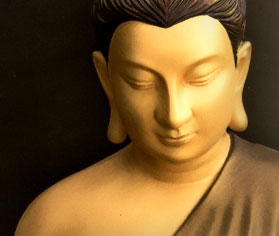
Buddhist resources

Buddhist information and educational network:
  • Timeline of Buddhist history (go).

  • Talks by Mediation teachers. Chanting and Buddhist songs (audio).

  • Insight meditation online techniques (go).

  • Go inside Lian Shan Shuang Lin Monastery, located in Singapore (go).

  • The Thai Buddha Images (go).

  • Daily readings from the Word of Buddha (read).

Sunday, 14 January 2007

Historical Wonders of Sanxingdui

The site of Sanxingdui, located in the city of Guanghan, 40 km from Chengdu, Sichuan Province (China), is recognized as one of the most important ancient remains in the world for its vast size, lengthy period and enriched cultural contents.
The first Sanxingdui relics were discovered by a farmer in 1929 and excavation has continued ever since. During this period, generations of archaeologists have worked on the discovery and research of the Sanxingdui culture. In 1986, two major sacrificial pits were found and they aroused widespread academic attention around the world.
The Sanxingdui finds are exciting, but they remain enigmatic. No texts have been found, nor is there any mention of this culture in the records of other countries. Analysis of lead and other elements in the bronzes indicates sources similar to those of other cultures along the lower reaches of the Yangtze River. At this point, however, the unique culture that produced these artifacts remains a mystery (View Pictures).