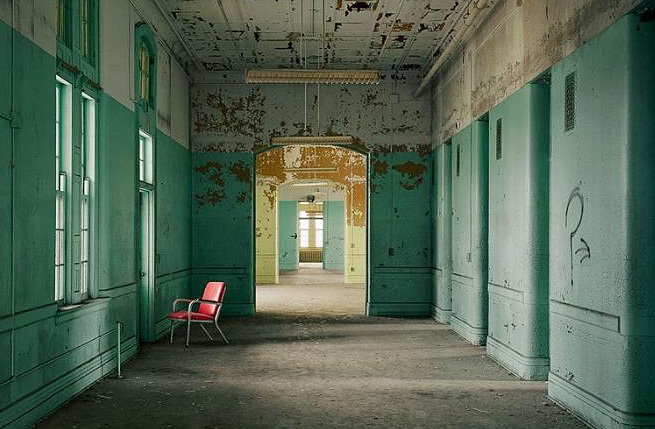
 We tend to think of mental hospitals as “snake pits”—places of nightmarish squalor and abuse—and this is how they have been portrayed in books and film. Few Americans, however, realize these institutions were once monuments of civic pride, built with noble intentions by leading architects and physicians, who envisioned the asylums as places of refuge, therapy, and healing. For more than half the nation’s history, vast mental hospitals—some of the largest structures ever built in America—were a prominent feature of the American landscape. From the mid-nineteenth century to the early twentieth, over 250 institutions for the insane were built throughout the United States. But in the second half of the twentieth century, after the introduction of psychotropic drugs and policy shifts toward community-based care, patient populations declined dramatically, leaving many of these massive buildings neglected and abandoned. Asylum: Inside the Closed World of State Mental Hospitals is a collection of large-format photographs taken by photographer Chris Payne, who was granted unprecedented access to seventy institutions in thirty states between 2002 and 2008. Through his lens we see palatial exteriors designed by famous architects and crumbling interiors never intended to be seen again. He shows how the hospitals functioned as self-contained communities, where almost everything of necessity was produced on site: food, water, power, and even clothing and furniture. Since many of these places no longer exist, his photographs serve as their final, “official” record.Accompanying the contemporary views are historic plans, drawings, and photographs, as well as an essay by world-renowned author and neurologist Dr. Oliver Sacks, who describes his own experience working at a state mental hospital. Sacks pays tribute to Payne's photographs and to the lives once lived in these places, “where one could be both mad and safe”.
Showing posts with label Picture. Show all posts
Showing posts with label Picture. Show all posts
Saturday, 21 November 2009
ASYLUM: Inside the Closed World of State Mental Hospitals
We tend to think of mental hospitals as “snake pits”—places of nightmarish squalor and abuse—and this is how they have been portrayed in books and film. Few Americans, however, realize these institutions were once monuments of civic pride, built with noble intentions by leading architects and physicians, who envisioned the asylums as places of refuge, therapy, and healing. For more than half the nation’s history, vast mental hospitals—some of the largest structures ever built in America—were a prominent feature of the American landscape. From the mid-nineteenth century to the early twentieth, over 250 institutions for the insane were built throughout the United States. But in the second half of the twentieth century, after the introduction of psychotropic drugs and policy shifts toward community-based care, patient populations declined dramatically, leaving many of these massive buildings neglected and abandoned. Asylum: Inside the Closed World of State Mental Hospitals is a collection of large-format photographs taken by photographer Chris Payne, who was granted unprecedented access to seventy institutions in thirty states between 2002 and 2008. Through his lens we see palatial exteriors designed by famous architects and crumbling interiors never intended to be seen again. He shows how the hospitals functioned as self-contained communities, where almost everything of necessity was produced on site: food, water, power, and even clothing and furniture. Since many of these places no longer exist, his photographs serve as their final, “official” record.Accompanying the contemporary views are historic plans, drawings, and photographs, as well as an essay by world-renowned author and neurologist Dr. Oliver Sacks, who describes his own experience working at a state mental hospital. Sacks pays tribute to Payne's photographs and to the lives once lived in these places, “where one could be both mad and safe”. 
Wednesday, 4 November 2009
Mark Twain, illuminated
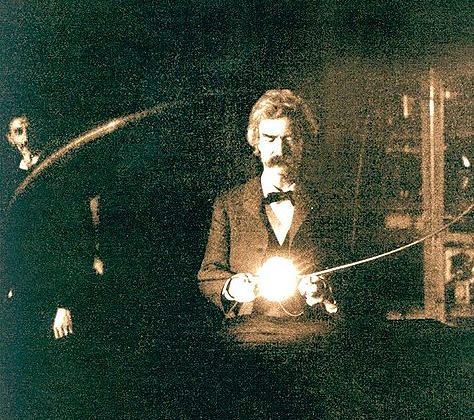 From a 1895 article called Tesla's Osillator and Other Inventions, a photo of Mark Twain with one of Tesla's marvelous contraptions.
Saturday, 24 January 2009
Darwin Big Idea
 Darwin is the biggest ever exhibition about Charles Darwin. It celebrates Darwin's ideas and their impact for his 200th birthday in 2009. Discover the man and the revolutionary theory that changed our understanding of the world. See incredible, revealing and rare exhibits, some on display for the first time (more at The Natural History Museum, London.
Friday, 21 November 2008
LIFE photo archive
 Search millions of photographs from the LIFE photo archive, stretching from the 1750s to today. Most were never published and are now available for the first time through the joint work of LIFE and Google (go).
Wednesday, 24 September 2008
Codex Ixtlilxochitl
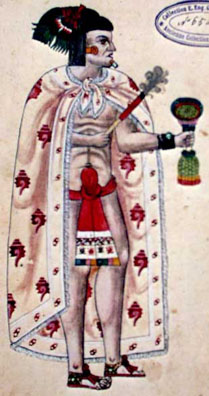 This is a manuscript with illustrations on European paper in folio, text in the Spanish language and is a fragment of a codex attributed by Leon y Parma to Don Fernando de Alva Ixtlilxochitl who was a "nobleman" of the Confederation of Culhua Mexica ("Aztec Empire") and the outstanding native historian of the early years of the Spanish Conquest. The codex deals with people and events of the pre-Conquest "Aztec Empire", which Ixtlilxochitl remembered. This will, naturally, be indispensible for any complete Latin American Library.
Saturday, 5 January 2008

Tuesday, 2 January 2007
Cave Painting 15,000-10,000 BC
 Wounded bison attacking a man. c. 15,000-10,000 BC. Bison length 43 in. (110 cm) Lascaux, France
Between Text and Image in Kandinsky’s Oeuvre
 Wassily Kandinsky‘Klänge’ from the album Klänge, Munich c.1912.
In 1938 Wassily Kandinsky published the text ‘My Woodcuts’ in the French periodical XXe Siècle. As was so often the case, when he wrote about his prints he focused largely on general artistic principles: the majority of the text is devoted to a general discussion of the need to privilege ‘synthesis’ over ‘analysis’ in both art and in life. However, he specifically referred to the album of poetry and engravings Sounds (Klänge), which had been published in Munich c.1912, as ‘a small example of synthetic work’

Sunday, 31 December 2006
Visual system by Descartes
 Figure 63 of De Homine (1662), by René Descartes. This figure shows how the light enters and makes images on the retina. The nervous pathway goes from the optic chiasma to the pineal gland. It moves toward the arm and induces the muscle contraction to project the arm onto the AC arrow.
Frogs lying
 If you happen across a pond full of croaking green frogs, listen carefully. Some of them may be lying. A croak is how male green frogs tell other frogs how big they are. The bigger the male, the deeper the croak. The sound of a big male is enough to scare off other males from challenging him for his territory.
While most croaks are honest, some are not. Some small males lower their voices to make themselves sound bigger. Their big-bodied croaks intimidate frogs that would beat them in a fair fight.
Saturday, 30 December 2006
Giotto and the comet
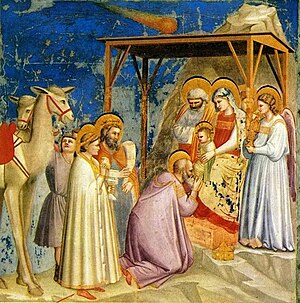 Giotto di Bondone (Colle di Vespignano, near Florence 1267 January 8 - Florence 1337), better known simply as Giotto, was a Florentine painter and architect who is generally considered the first in a line of great artists who contributed to and developed the Italian Renaissance. Giotto's master work is the Arena Chapel cycle of the Cappella degli Scrovegni in Padua depicting the life of the Virgin and the passion of Christ completed around 1305. The scheme has 100 major scenes with the heavily sculptural figures set in compressed but naturalistic settings often using forced perspective devices. Famous panels in the series include the Adoration of the Magi (picture), in which a comet like Star of Bethlehem streaks across the sky and the Flight from Egypt in which Giotto broke many traditions for the depiction of the scene.
This fresco, painted sometime between 1304 and 1306, features an accurately represents a comet above the Nativity stable. The fresco's realistic potrayal strongly suggests that it was based on the artist's first-hand observation of the comet Halley during its appearance in the skies over Europe in Oct. 1301. Almost seven centuries later the spaceprobe "Giotto" from the European Space Agency, was designed to study Halley's Comet. On March, 13, 1986, Giotto approached at a 596 kilometer distance from Halley's nucleus and obtained our first direct images of a comet nucleus. Giotto's images showed the nucleus to be an irregular object, something like a potato, with dimensions 15 km long and up to 10 km wide (picture).
Monday, 25 December 2006
A pale blue dot
It was Carl Sagan's idea to turn Voyager's camera back toward the planet that launched the spacecraft in order to reveal to that planet's inhabitants their "true circumstance and condition". After much resistance, Dr. Sagan prevailed, and on February 14, 1990, from a distance of 6.4 billion kilometers , Voyager 1 captured this image of our Earth. Here the entire world fills only 0.12 pixel and appears as a tiny crescent of light.

Look again at that dot. That's here. That's home. That's us. On it everyone you love, everyone you know, everyone you ever heard of, every human being who ever was, lived out their lives. The aggregate or your joy and suffering, thousands of confident religions, ideologies and economic doctrines, every hunter and forager, every hero and coward, every creator and distroyer of civilization, every king and peasant, every young couple in love, every mother and father, hopeful child, inventor and explorer, every teacher of morals, every corrupt politician, every "superstar", every "supreme leader", every saint and sinner, in the history of our species lived here -on a mote of dust suspended in a sunbeam.
The earth is a very small stage in a vast cosmic arena. Think of the rivers of blood spilled by all those generals and emperors so that, in glory and triumph, they could become the momentary masters of a fraction of a dot. Think of the endless cruelties visited by the inhabitants of a corner of this pixel on the scarcely distinguishable inhabitants of some other corner, how frequent their misunderstandings, how eager they are to kill one another, how fervent their hatreds.
Our posturing, our imagined self-importance, the delusion that we have some privileged position in the Universe, are challenged by this point of pale light. Our planet is a lonely speck in the great enveloping cosmic dark. In our obscurity, in all this vastness, there is no hint that help will come from elsewhere to save us from ourselves.
The Earth is the only world known so far to harbor life. There is nowhere else, at least in the near future, to which our species could migrate. Visit, yes. Settle, not yet. Like it or not, for the moment the Earth is where we make our stand.
It has been said that astronomy is a humbling and character-building experience. There is perhaps no better demonstration of the folly of human conceits that this distant image or our tiny world. To me, it underscores our responsability to deal more kindly with one another , and to preserve and cherish the pale blue dot , the only home we've ever known.
Carl Sagan, Pale Blue Dot, Random House, 1994

Look again at that dot. That's here. That's home. That's us. On it everyone you love, everyone you know, everyone you ever heard of, every human being who ever was, lived out their lives. The aggregate or your joy and suffering, thousands of confident religions, ideologies and economic doctrines, every hunter and forager, every hero and coward, every creator and distroyer of civilization, every king and peasant, every young couple in love, every mother and father, hopeful child, inventor and explorer, every teacher of morals, every corrupt politician, every "superstar", every "supreme leader", every saint and sinner, in the history of our species lived here -on a mote of dust suspended in a sunbeam.
The earth is a very small stage in a vast cosmic arena. Think of the rivers of blood spilled by all those generals and emperors so that, in glory and triumph, they could become the momentary masters of a fraction of a dot. Think of the endless cruelties visited by the inhabitants of a corner of this pixel on the scarcely distinguishable inhabitants of some other corner, how frequent their misunderstandings, how eager they are to kill one another, how fervent their hatreds.
Our posturing, our imagined self-importance, the delusion that we have some privileged position in the Universe, are challenged by this point of pale light. Our planet is a lonely speck in the great enveloping cosmic dark. In our obscurity, in all this vastness, there is no hint that help will come from elsewhere to save us from ourselves.
The Earth is the only world known so far to harbor life. There is nowhere else, at least in the near future, to which our species could migrate. Visit, yes. Settle, not yet. Like it or not, for the moment the Earth is where we make our stand.
It has been said that astronomy is a humbling and character-building experience. There is perhaps no better demonstration of the folly of human conceits that this distant image or our tiny world. To me, it underscores our responsability to deal more kindly with one another , and to preserve and cherish the pale blue dot , the only home we've ever known.
Carl Sagan, Pale Blue Dot, Random House, 1994
Sunday, 24 December 2006
Earth from Space

pdf documents showing beautiful photos from Africa, Asia and Oceania from Space.
Earth from Space - Africa
Earth from Space - Asia and Oceania
Madagascar
Ships passing through the Panama Canal
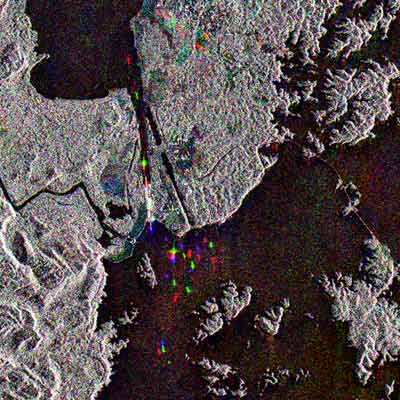 Appearing in this Envisat radar image like shining jewels, ships pass from the man-made Lake Gatun through the Panama Canal across Central America.
The colour in this image is due to it being a multitemporal composite, made up of three Advanced Synthetic Aperture Radar (ASAR) images acquired on different dates, with separate colours assigned to each acquisition to highlight differences between them: Red for 16 March, Green for 12 Jan and blue for 14 October 2004. The view was acquired in ASAR Image Mode Precision, with pixel sampling of 12.5 metres.
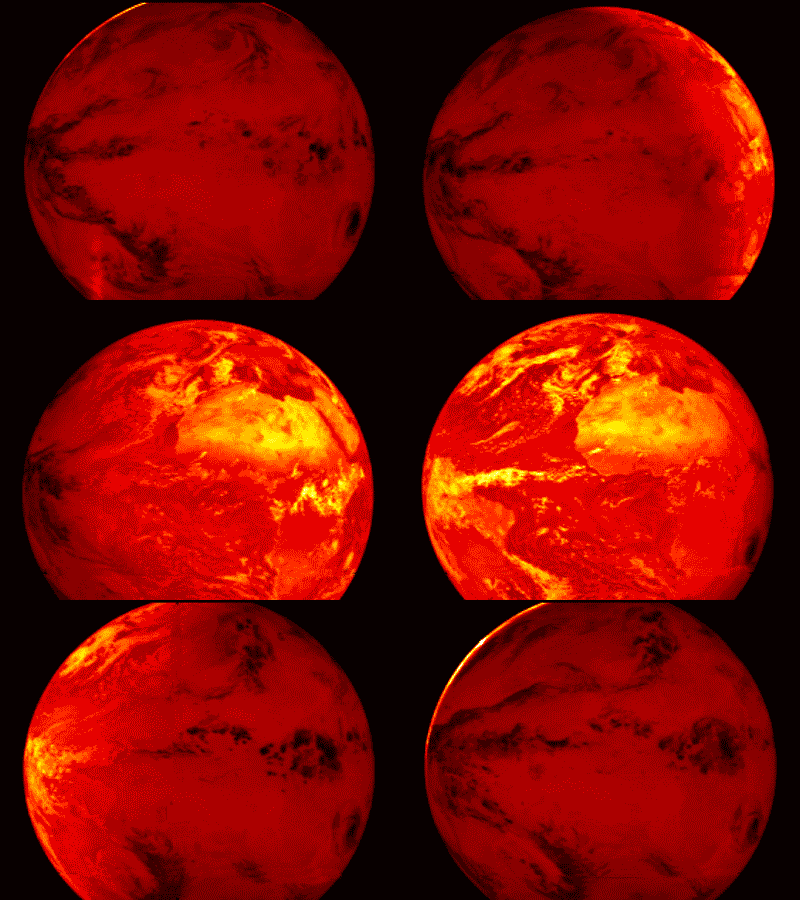
Satellite portrait of global plant growth will aid climate research
An ambitious ESA (European Space Agency) project to chart ten years in the life of the Earth's vegetation has reached a midway point, with participants and end-users having met to review progress so far. Harnessing many terabytes of satellite data, the GLOBCARBON project is intended to hone the accuracy of climate change forecasting. GLOBCARBON involves the development of a service to generate fully calibrated estimates of land products based on a variety of Earth Observation data, suitable for assimilation into sophisticated software simulations of the planet created by the global carbon modelling community.
The service is focused on the generation of various global estimates of aspects of terrestrial vegetation: the number, location and area of fire-affected land, known as Burnt Area Estimates (BAE), the area of green leaf exposed to incoming sunlight for photosynthesis, known as Leaf Area Index (LAI), the sunlight actually absorbed for photosynthesis, known as the Fraction of Absorbed Photosynthetically Active Radiation (fAPAR) and the Vegetation Growth Cycle (VGC).
The service is focused on the generation of various global estimates of aspects of terrestrial vegetation: the number, location and area of fire-affected land, known as Burnt Area Estimates (BAE), the area of green leaf exposed to incoming sunlight for photosynthesis, known as Leaf Area Index (LAI), the sunlight actually absorbed for photosynthesis, known as the Fraction of Absorbed Photosynthetically Active Radiation (fAPAR) and the Vegetation Growth Cycle (VGC).

Worldwide leaf area index (LAI)


Saturday, 23 December 2006
Peering into the Heart of the Crab Nebula
 In the year 1054 A.D., Chinese astronomers were startled by the appearance of a new star, so bright that it was visible in broad daylight for several weeks. Today, the Crab Nebula is visible at the site of the "Guest Star." Located about 6,500 light-years from Earth, the Crab Nebula is the remnant of a star that began its life with about 10 times the mass of our own Sun. Its life ended on July 4, 1054 when it exploded as a supernova. In this image, NASA's Hubble Space Telescope has zoomed in on the center of the Crab to reveal its structure with unprecedented detail. The Crab Nebula data were obtained by Hubble's Wide Field and Planetary Camera 2 in 1995. Images taken with five different color filters have been combined to construct this new false-color picture. Resembling an abstract painting by Jackson Pollack, the image shows ragged shards of gas that are expanding away from the explosion site at over 3 million miles per hour. The core of the star has survived the explosion as a pulsar, visible in the Hubble image as the lower of the two moderately bright stars to the upper left of center. The pulsar is a neutron star that spins on its axis 30 times a second. It heats its surroundings, creating the ghostly diffuse bluish-green glowing gas cloud in its vicinity, including a blue arc just to its right. The colorful network of filaments is the material from the outer layers of the star that was expelled during the explosion. The picture is somewhat deceptive in that the filaments appear to be close to the pulsar. In reality, the yellowish green filaments toward the bottom of the image are closer to us, and approaching at some 300 miles per second. The orange and pink filaments toward the top of the picture include material behind the pulsar, rushing away from us at similar speeds. The various colors in the picture arise from different chemical elements in the expanding gas, including hydrogen (orange), nitrogen (red), sulfur (pink), and oxygen (green). The shades of color represent variations in the temperature and density of the gas, as well as changes in the elemental composition.
Subscribe to:
Posts (Atom)